

Patches for shirts and polos need a different approach from patches for jackets, bags, or heavy workwear.
The reason is simple: shirts are usually lighter, softer, and more flexible. A patch that feels perfectly balanced on a denim jacket may feel bulky on a polo or pull awkwardly on a thin work shirt.
For most shirt and polo projects, the best patch is one that keeps the design readable without adding unnecessary weight or stiffness.
Before ordering, consider five things:
- Shirt fabric
- Patch weight and flexibility
- Placement
- Attachment method
- Uniform consistency
For a broader overview of patch materials and clothing applications, see our Clothing Patch Guide.
Start With the Shirt, Not the Patch
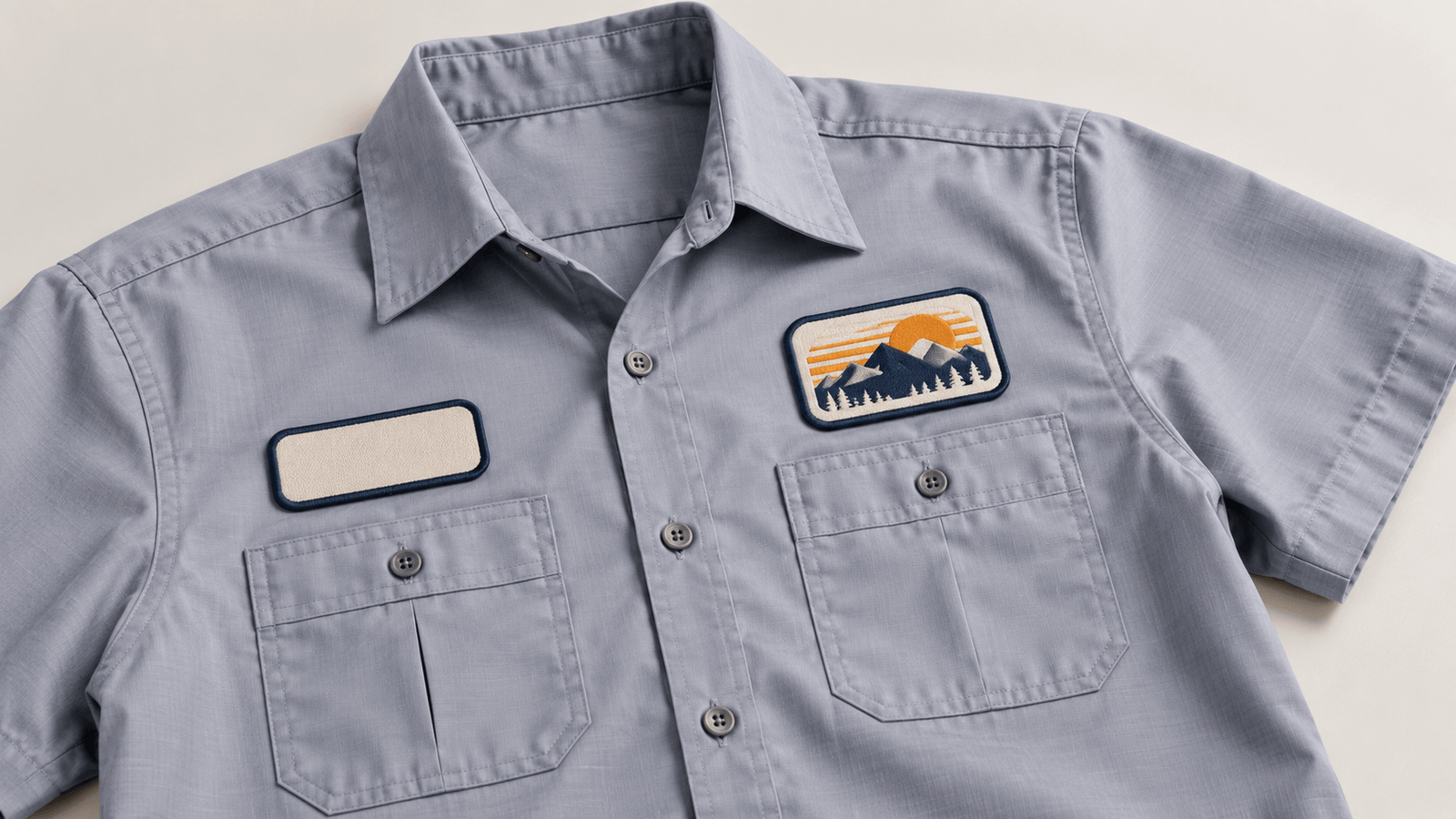
The garment should influence the patch choice.
A polo, lightweight button-up shirt, work shirt, and performance shirt may all behave differently even if they carry the same company logo.
Check the garment for:
- Fabric thickness
- Stretch
- Moisture-wicking construction
- Pocket placement
- Buttons or placket
- Sleeve shape
- Heat-care instructions
- Existing embroidery
A heavier patch on a lightweight shirt can pull the fabric downward or make the front panel sit differently.
That does not mean shirts cannot use patches. It means the patch should be planned around the garment.
What Patch Types Work Well on Shirts?
Several patch styles can work, but their weight, texture, and detail level differ.
Embroidered Patches
Embroidery gives shirts and polos a traditional stitched look.
It works well for:
- Business logos
- Employee identification
- Team emblems
- School or club marks
- Simple text
- Bold symbols
For lightweight shirts, keep the size and embroidery build appropriate to the fabric.
A very large, heavily stitched design may feel more rigid than necessary on a soft polo.
Woven Patches
Woven patches can be a strong choice when the design contains:
- Smaller lettering
- Fine lines
- Compact logos
- Detailed brand marks
They generally create a flatter, smoother appearance than traditional embroidery.
That can be useful when you want a patch to sit neatly on lighter apparel.
PVC Patches
PVC creates a molded, dimensional look.
It may suit:
- Outdoor workwear
- Modern brand apparel
- Utility clothing
- Gear-oriented uniforms
However, consider weight and flexibility carefully before using a thick or substantial patch on a lightweight polo.
The patch should not overpower the garment.
Lightweight Fabric Needs a Lighter Touch
Shirts and polos are designed to move with the body.
A patch adds another layer to that fabric.
Large or rigid patches can affect:
- Drape
- Comfort
- Flexibility
- How the shirt hangs
- How the fabric moves around the chest or sleeve
For this reason, do not choose patch dimensions in isolation.
Place a paper template of the intended size on the garment first.
Then:
- Put the shirt on.
- Move the arms naturally.
- Sit and stand.
- Check whether the patch area folds or bends.
- Look at the shirt from normal viewing distance.
The patch should feel like part of the garment rather than a separate rigid panel.
Chest Placement Usually Works Best for Branding
Chest placement is one of the most useful positions for shirts and polos.
It works well for:
- Business logos
- Employee identification
- Team branding
- Club emblems
- Small organization marks
A common setup is:
One side: Company or organization logo
Other side: Employee name or role
The exact side depends on your uniform system and garment construction.
The important point is consistency.
Do not position every shirt by eye.
Use repeatable references such as:
- Placket
- Centerline
- Shoulder seam
This helps the same patch look consistent across several shirts.
Be Careful Around Chest Pockets
A pocket changes both the usable area and the visual balance.
Before placing a patch:
- Check the pocket width.
- Open the pocket.
- Note where the internal pocket bag sits.
- Leave enough clearance for normal use.
- Avoid stitching that closes the pocket unintentionally.
If the logo sits above the pocket, use the pocket as a visual reference.
If the patch goes on the opposite chest, compare both sides so the placement feels balanced.
Sleeve Patches Can Work Well When the Chest Is Busy
The upper sleeve can be useful for:
- Secondary logos
- Department identifiers
- Team marks
- Flags
- Supporting brand elements
This is especially helpful when the chest already contains:
- Company embroidery
- Name patch
- Other identification
Keep sleeve patches relatively compact.
The sleeve curves around the arm, so a patch that is too wide may wrap awkwardly toward the front or back.
Test the actual size before approving it.
Polo Shirts Need Extra Attention Around the Placket
A polo shirt has a strong visual center created by the collar and button placket.
A chest patch should work with that structure.
Avoid positioning it:
- Too close to the buttons
- Too high into the collar area
- Too far toward the armhole
- Directly where the fabric folds heavily
Place the patch on the actual garment and look at it while the polo is being worn.
The right position on a flat table can sometimes appear different once the shirt follows the body.
Should Shirt Patches Be Sew-On or Iron-On?
Both methods can work in the right situation.
The better choice depends on the fabric, washing, wear, and how permanent the patch needs to be.
Sew-On Patches for Shirts
Sew-on can be a strong choice for:
- Work uniforms
- Frequently worn shirts
- Repeated laundering
- Fabrics that should not be exposed to high application heat
- Long-term placement
The patch is mechanically attached around its edge.
For lightweight shirts, good stitching technique matters because excessive tension can cause the surrounding fabric to pucker.
Iron-On Patches for Shirts
Iron-on backing can be convenient when:
- The garment is compatible with heat.
- The patch is designed for heat application.
- The fabric can tolerate the required temperature and pressure.
Do not assume that every polo or performance shirt is safe for ironing.
Synthetic and technical fabrics may have specific care limitations.
Check the garment label first.
For a full comparison, see the Patch Backing Types Guide.
What About Stretch and Performance Shirts?
Performance polos and active shirts can contain stretch fibers or moisture-management fabrics.
These garments may behave differently from standard cotton work shirts.
Before applying a patch, consider:
- Fabric stretch
- Heat sensitivity
- Surface texture
- Frequent washing
- Movement
A rigid patch attached across an area that stretches heavily may feel uncomfortable or cause the garment to move differently.
Try to place patches on relatively stable areas of the garment.
Chest and upper-sleeve panels may work better than high-movement areas depending on the shirt construction.
Patch Size Should Match the Available Panel
A shirt patch should be large enough to read but small enough to stay comfortable.
Do not judge size only by the artwork.
Look at the garment area available.
A patch may need more room if it includes:
- Long business name
- Department text
- Detailed logo
- Multiple colors
- Small lettering
If the design becomes crowded, consider simplifying the artwork rather than making the patch excessively large.
For detailed sizing guidance, see the Custom Patch Size Guide.
Consider How the Patch Feels From the Inside
This is often overlooked.
A patch on a shirt can sit directly against the wearer’s body.
Think about:
- Stitching on the inside
- Backing texture
- Garment thickness
- Patch location
- Whether an undershirt is normally worn
A work jacket provides more separation between the patch and skin.
A lightweight polo may not.
Comfort should therefore be part of the decision, especially for shirts worn through a full workday.
Keep Uniform Patches Consistent Across Staff
If shirts or polos are being ordered for a team, business, school, or club, create one approved setup.
Record:
- Patch type
- Dimensions
- Colors
- Backing
- Placement
- Logo version
- Name format
- Shirt type
This prevents one employee receiving a logo that is higher, larger, or positioned differently from everyone else’s.
If staff members wear several garment sizes, check the placement on both smaller and larger shirts.
The same visual placement may require slightly different measurement references across sizes.
Use Different Patch Versions Only When Necessary
Some businesses use:
- Light polos
- Dark polos
- Short-sleeve work shirts
- Long-sleeve uniforms
The same patch may work across all of them.
But if contrast or garment construction changes significantly, you may need controlled variations.
For example:
Dark garment version: Light background or lettering
Light garment version: Darker background or lettering
Keep those variations documented so they remain intentional.
Quick Shirt and Polo Patch Checklist
Before approving the order, confirm:
- Patch suits the fabric weight
- Design is readable at the final size
- Patch does not feel unnecessarily bulky
- Chest or sleeve location has been tested
- Pocket and placket clearance is sufficient
- Heat tolerance has been checked
- Backing suits the garment
- Placement is consistent across the uniform
- Small and large shirt sizes have been reviewed
- Approved artwork and placement are saved for reorders
Choose the Patch Around the Shirt
The best patches for shirts and polos balance branding, comfort, flexibility, and durability.
Embroidered patches can provide classic stitched branding. Woven patches may suit fine details and a flatter profile. Other patch styles can work when their weight and construction fit the garment.
Whichever style you choose, test it on the shirt itself.
Consider the chest or sleeve space, how the fabric moves, how the patch will be attached, and how the garment will be worn and washed.
For more clothing options, explore Custom Clothing Patches and request a free quote using your artwork, shirt type, preferred patch dimensions, quantity, and attachment method.
Frequently Asked Questions
What type of patch works best on polo shirts?
Embroidered and woven patches are both common choices. Embroidery provides a classic textured appearance, while woven construction can offer a flatter look and better definition for fine details.
Are patches too heavy for lightweight shirts?
They can be if the patch is large, thick, or rigid relative to the garment. Test the intended size and material on the actual shirt before finalizing the order.
Can you iron patches onto polo shirts?
Only when the garment and patch are suitable for heat application. Always check the polo’s fabric composition and care instructions before applying heat.
Is sew-on better than iron-on for work shirts?
Sew-on is often useful for long-term attachment and frequently worn uniforms, especially where heat application is unsuitable. Iron-on may be convenient on compatible fabrics.
Where should a logo patch go on a polo shirt?
The chest is a common branding location. Sleeve placement can work for secondary logos or identifiers. Use the garment’s placket, pocket, and shoulder structure to create consistent positioning.
Can the same patch be used on different shirt sizes?
Often yes, but placement should be checked across the size range. A patch that looks balanced on a larger shirt may need a different measured reference on a smaller garment.
