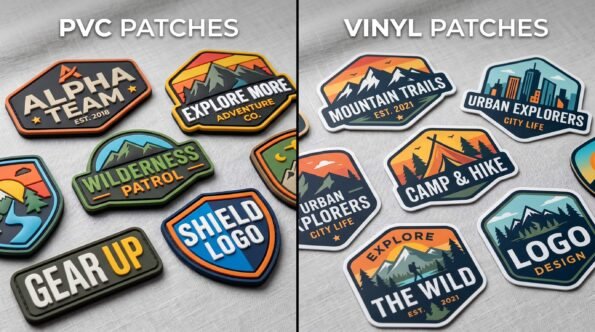
Choosing the right patch material can make a big difference in how your patches look, feel, and perform over time. PVC vs vinyl patches is a common comparison for businesses, sports teams, clubs, outdoor enthusiasts, and anyone looking for durable custom patches.
Although both materials are synthetic and can offer excellent resistance to moisture, they are not exactly the same. PVC patches are made from polyvinyl chloride and are known for their rubber-like feel, durability, and ability to create raised or 3D designs. Vinyl patches are typically lightweight and flexible, making them suitable for applications where flexibility and a smooth appearance are important.
So, which one should you choose? The answer depends on your design, intended use, durability requirements, and budget.
What Are PVC Patches?
PVC patches are made from polyvinyl chloride, a durable synthetic material that can be molded into different shapes and thicknesses. Unlike traditional embroidered patches, PVC patches have a smooth, rubber-like surface that can include raised sections, recessed details, and multiple layers.
One of their biggest advantages is durability. PVC material can withstand moisture, dirt, and regular handling, making these patches particularly useful for products and clothing exposed to outdoor conditions.
PVC also provides excellent design flexibility. Manufacturers can create simple flat patches or add raised elements to logos, lettering, symbols, and other artwork. This makes PVC a popular option for brands that want a modern, bold, or three-dimensional appearance.
Common applications include uniforms, backpacks, outdoor equipment, sports apparel, workwear, hats, and promotional merchandise.
What Are Vinyl Patches?
Vinyl patches use a flexible synthetic material designed to provide a lightweight and smooth patch solution. They can be produced in different shapes, colors, and graphic styles, making them useful for branding, promotional products, apparel, and other applications.
Compared with traditional fabric patches, vinyl offers a clean and contemporary appearance. Its flexible construction can also make it suitable for items that bend or move regularly.
Vinyl patches can reproduce logos, graphics, lettering, and other artwork. However, the final appearance and level of detail depend on the manufacturing method, artwork, and patch design.
For customers who want a lightweight patch with a smooth finish and flexible construction, vinyl can be a practical choice.
PVC vs Vinyl Patches: Key Differences
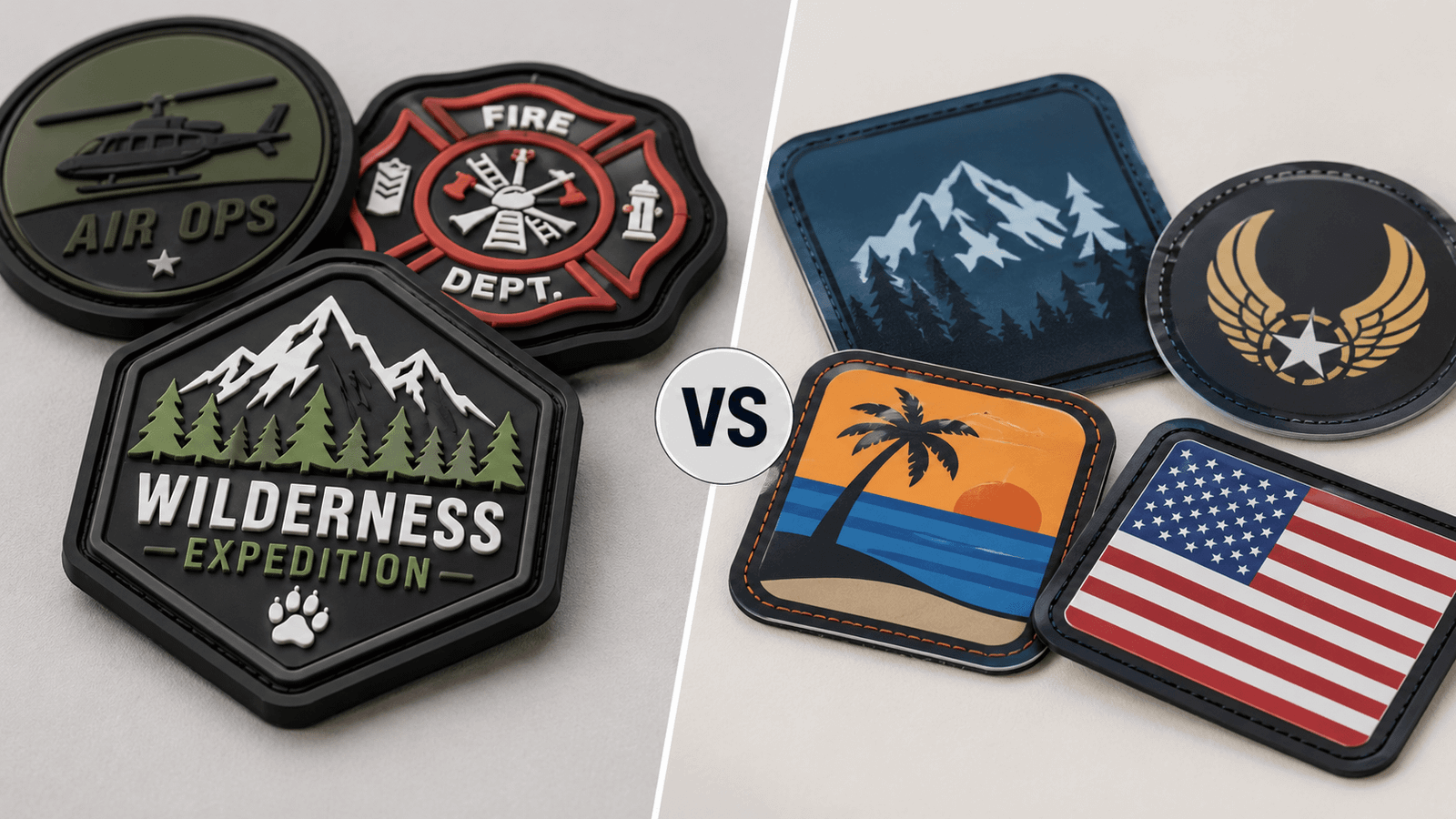
When comparing PVC vs vinyl patches, several factors should be considered.
Material and Construction
The primary difference is the material itself. PVC patches are produced from polyvinyl chloride and are generally molded into the desired shape. This molding process allows manufacturers to create raised borders, lettering, and dimensional artwork.
Vinyl patches are also synthetic but are typically produced using flexible vinyl material and a different manufacturing process. This can result in a thinner and more flexible finished product.
Texture and Appearance
PVC patches typically have a rubber-like surface. They can be completely flat or feature raised and recessed sections.
This makes them particularly effective for bold logos and designs where depth is part of the visual identity.
Vinyl patches generally have a smooth and flat appearance. They can provide a clean graphic finish without the dimensional effect commonly associated with PVC.
Durability and Weather Resistance
Durability is one of the strongest advantages of PVC. The material is resistant to water and can handle regular exposure to dirt, moisture, and outdoor conditions.
Vinyl can also provide good durability, especially when properly manufactured and applied. However, the exact performance depends on the material quality, application method, and environment.
For equipment that will regularly face harsh outdoor conditions, PVC is often the safer choice.
Flexibility
Both materials can offer flexibility, but the amount can vary depending on thickness and construction.
Thinner vinyl designs can be particularly flexible and lightweight. PVC can also bend, but thicker or heavily molded designs may feel more substantial.
If the patch will be placed on a surface that frequently bends, consider the patch thickness and construction rather than looking at the material name alone.
Design and Customization
PVC is particularly strong when it comes to dimensional designs. Manufacturers can create multiple levels, raised lettering, borders, and other molded effects.
Vinyl can work well for clean graphic designs, logos, text, and other artwork where a flat appearance is preferred.
Your artwork should therefore influence the material you select. A simple logo may work well with either option, while a design that depends on raised details may benefit more from PVC.
Small Details and Text
Both materials can reproduce detailed artwork, but there are practical limits to extremely small text and intricate elements.
PVC can provide crisp molded details when the artwork is designed correctly. However, very small elements may still need to be simplified so they remain clear at the final patch size.
Vinyl can also reproduce detailed graphics, particularly when the production process is suited to the artwork.
For either option, always request a digital proof before production if your design contains small lettering or intricate details.
Cleaning and Maintenance
PVC patches are easy to clean because their smooth surface does not absorb dirt in the same way that some fabric materials can.
Vinyl is also relatively easy to maintain. In most cases, surface dirt can be removed with a soft cloth and mild cleaning solution.
Always follow the manufacturer’s care recommendations, particularly when the patch is attached to clothing or equipment that requires special washing instructions.
Cost
The price of a custom patch depends on more than the material. Size, quantity, shape, artwork complexity, backing, colors, production method, and customization can all affect the final price.
PVC may cost more when a design requires multiple layers, special molding, or dimensional effects. Vinyl can be a cost-effective option for certain flat and lightweight designs.
Rather than choosing based solely on material price, compare the total value, expected lifespan, appearance, and intended application.
PVC vs Vinyl Patches Comparison
| Feature | PVC Patches | Vinyl Patches |
|---|---|---|
| Material | Polyvinyl chloride | Flexible vinyl |
| Appearance | Smooth, rubber-like | Smooth and graphic |
| Surface | Flat, raised, or recessed | Usually flat |
| Durability | Excellent | Good to excellent |
| Water Resistance | Excellent | Generally excellent |
| Flexibility | Flexible, depending on thickness | Highly flexible in thin formats |
| 3D Effects | Excellent | Limited |
| Fine Details | Very good | Very good |
| Outdoor Applications | Excellent | Good |
| Cleaning | Easy | Easy |
| Best For | Durable and dimensional designs | Lightweight and flexible designs |
Which Is More Durable: PVC or Vinyl Patches?
If durability is your main priority, PVC is usually the stronger choice. Its molded construction and resistance to moisture make it well suited to demanding environments.
This is particularly useful for outdoor equipment, workwear, sports gear, bags, and uniforms that receive frequent use.
That does not mean vinyl patches are fragile. High-quality vinyl can also provide long-lasting performance. The final lifespan depends on material quality, patch thickness, attachment method, washing conditions, and how the product is used.
Which Patch Is Better for Detailed Designs?
There is no universal winner when it comes to detail. The best material depends on the type of artwork.
PVC is an excellent choice when you want raised lettering, dimensional logos, defined borders, or a molded appearance.
Vinyl can be a strong option for flat graphics, lightweight designs, and artwork where flexibility is important.
If your logo contains extremely small text, ask the manufacturer to review the artwork before production. Simplifying tiny details can often produce a cleaner final result regardless of the material.
PVC vs Vinyl Patches: Which One Should You Choose?
The best option in the PVC vs vinyl patches debate depends on what you need from your patch.
Choose PVC patches if you want:
- Excellent durability
- Water-resistant construction
- A rubber-like appearance
- Raised or 3D elements
- Strong outdoor performance
- A modern molded design
Choose vinyl patches if you want:
- A lightweight option
- Flexible construction
- A smooth graphic appearance
- Flat logos and artwork
- A practical option for apparel and promotional applications
For outdoor gear and applications where durability is critical, PVC is generally the better choice. For lightweight applications where flexibility and a flat appearance matter more, vinyl may be the better fit.
Ultimately, the right material should match your design and the conditions in which the patch will be used.
Final Thoughts
Understanding the difference between PVC and vinyl patches makes it easier to choose the right option for your project. PVC stands out for durability, molded construction, and 3D design possibilities, while vinyl can provide a lightweight and flexible solution with a clean graphic finish.
Before placing an order, consider your artwork, application, expected wear, flexibility requirements, and desired appearance. A quality manufacturer can also help determine which material will produce the best result for your specific design.
FAQs:
Are PVC patches better than vinyl patches?
PVC patches are generally better for maximum durability, outdoor use, and raised or 3D designs. Vinyl can be a better choice when lightweight construction and flexibility are more important.
Are PVC patches waterproof?
Yes. PVC is naturally resistant to water, which makes PVC patches suitable for outdoor clothing, bags, equipment, and other applications exposed to moisture.
Are vinyl patches waterproof?
Many vinyl patches are water-resistant or waterproof, but performance depends on the specific vinyl material, construction, and backing. Check the manufacturer’s specifications for your product.
Which lasts longer, PVC or vinyl patches?
PVC patches generally offer excellent long-term durability, particularly in demanding outdoor environments. However, the lifespan of either material depends on quality, thickness, attachment method, and usage conditions.
Can PVC patches be made in 3D?
Yes. One of the major advantages of PVC patches is the ability to create raised and recessed sections, making them ideal for three-dimensional logos and lettering.
Are vinyl patches flexible?
Yes. Vinyl can be highly flexible, particularly when produced in a thinner format. This makes it suitable for applications where the patch needs to bend or move with the underlying material.
Which is cheaper, PVC or vinyl patches?
There is no fixed answer. Pricing depends on size, quantity, design complexity, thickness, colors, backing, and manufacturing requirements. A simple vinyl patch may cost less than a complex molded PVC design, but quotes can vary between manufacturers.
