

Custom patches are made to add personality and durability to jackets, uniforms, hats, bags, team apparel, and other garments. But even a well-made patch can fade, fray, peel, or lose its shape if it is exposed to excessive heat, harsh chemicals, or rough washing.
The good news is that most custom patches can be washed and maintained safely. The right care method depends on two things: the patch material and the type of backing or attachment. Embroidered, woven, PVC, chenille, sublimation, and leather patches do not all respond to washing and heat in the same way.
This guide explains how to wash, clean, dry, and maintain custom patches while helping you avoid the most common causes of patch damage.
Can You Wash Custom Patches?
Yes, most custom patches can be washed, but they should be treated more carefully than ordinary fabric. For most garments with patches, use a gentle wash cycle, cool or cold water, mild detergent, and low or no heat when drying.
Before washing, check the garment’s care label and consider how the patch is attached. Sew-on patches generally tolerate washing well because the stitching physically secures them to the garment. Iron-on patches require more attention because excessive heat and repeated washing can weaken the adhesive.
If the patch manufacturer provides specific care instructions, follow those instructions first.
How to Wash Clothes With Custom Patches
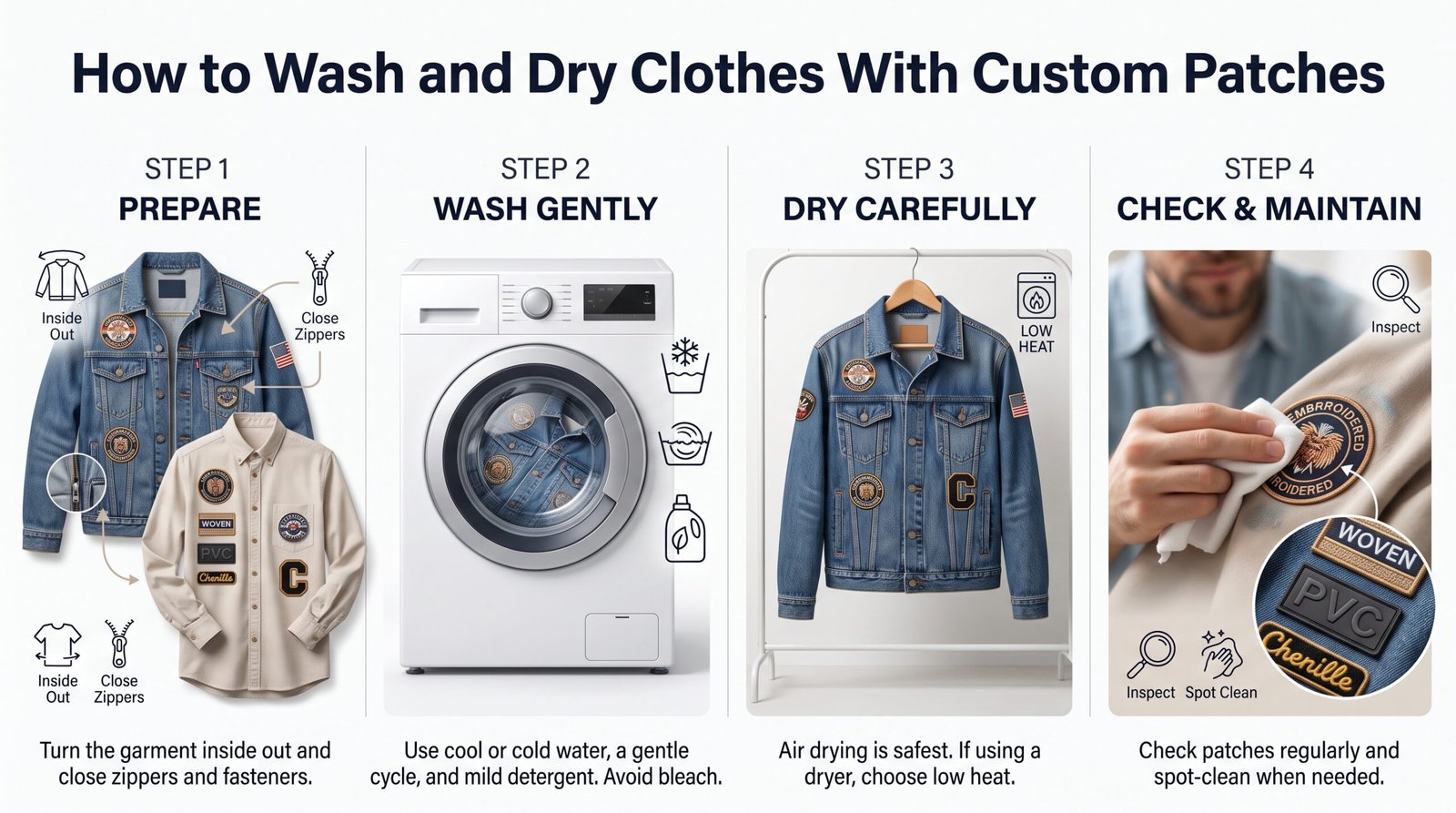
Use these steps as a general starting point for washing garments with custom patches:
1. Turn the garment inside out
Turning a patched garment inside out reduces direct friction between the patch and other clothing during the wash. It can also help protect raised stitching, printed details, and other decorative surfaces.
For heavily decorated garments, placing the item in a laundry bag provides an additional layer of protection.
2. Use cold or cool water
Cold or cool water is generally a safer choice for patches than very hot water. High temperatures can contribute to color fading and may soften or weaken some patch adhesives.
This is particularly important for iron-on patches and heat-sensitive materials.
3. Choose a gentle cycle
Use a gentle or delicate cycle when possible. Avoid unnecessarily aggressive washing, especially for garments containing chenille patches, raised embroidery, delicate lettering, or other textured details.
4. Use a mild detergent
Choose a regular mild laundry detergent and use it according to the garment manufacturer’s instructions. Avoid chlorine bleach and harsh chemical cleaners unless the garment manufacturer specifically recommends them.
Bleach and aggressive cleaning products can affect patch colors, threads, printed surfaces, or the surrounding fabric.
5. Avoid excessive friction
Do not aggressively scrub an embroidered or textured patch simply because it has a visible stain. Repeated rubbing can damage fibers and flatten raised details.
For a small stain, spot cleaning is often a better approach.
How to Clean Custom Patches Without Washing the Whole Garment
Sometimes the patch is only slightly dirty and the entire garment does not need to be washed.
Start by removing loose dust or debris. Then mix a small amount of mild detergent with water and use a soft, clean cloth to gently dab the affected area.
Avoid soaking patches unnecessarily, especially when you are unsure about the backing or material. After cleaning, wipe away any detergent residue with a clean damp cloth and allow the patch to dry naturally.
Do not scrub aggressively. A gentle dabbing motion is safer for embroidery, woven details, chenille, and printed designs.
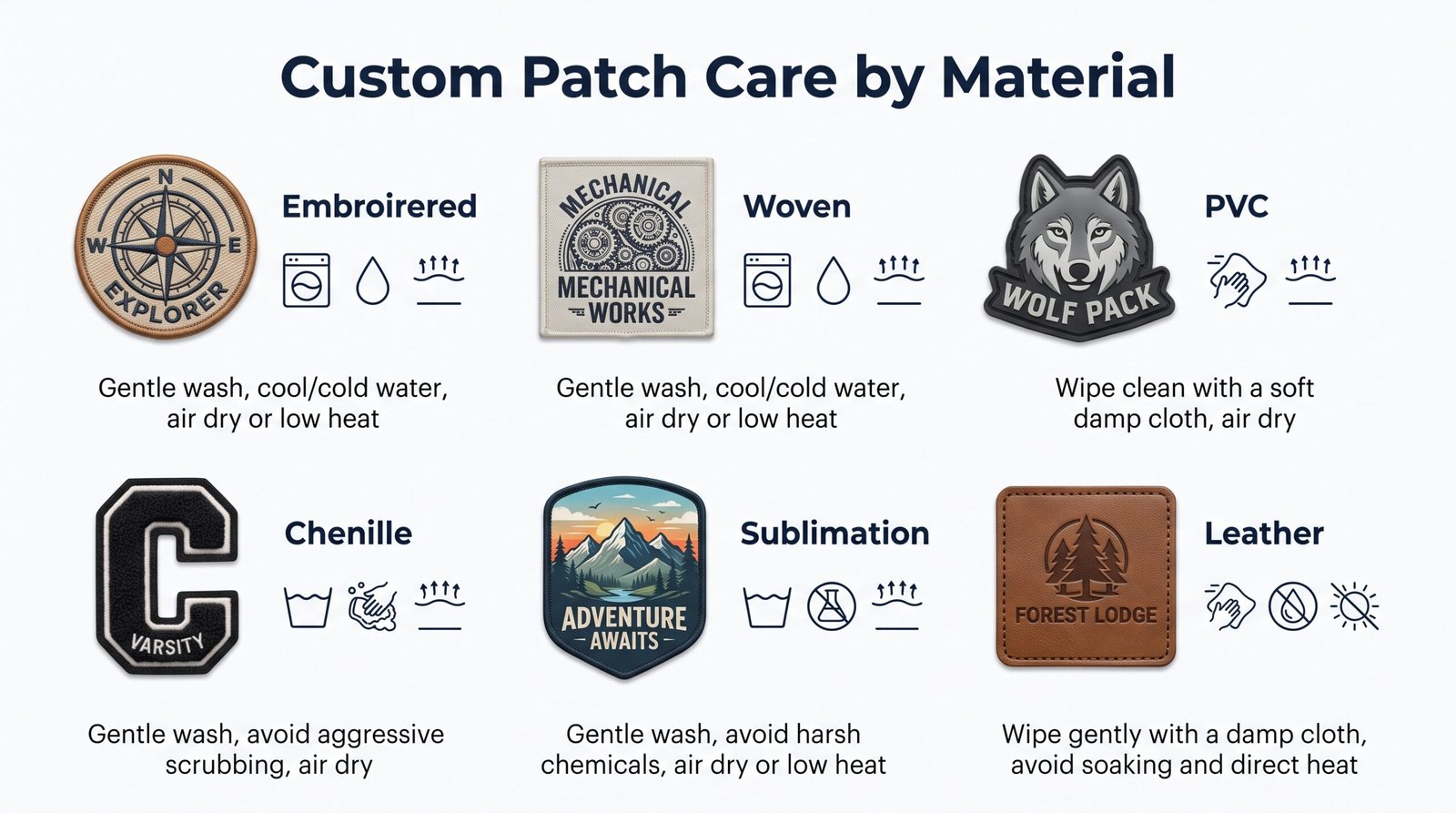
Custom Patch Care by Material
Different patch materials require slightly different care. Knowing what your patch is made from can help you choose the safest cleaning method.
Embroidered Patches
Embroidered patches use stitched thread to create a textured design. They can generally be washed with the garment, but rough washing and excessive heat should be avoided.
Turn the garment inside out, use cold or cool water, select a gentle cycle, and use mild detergent. Avoid directly scrubbing the embroidered surface.
For drying, air drying is the safest option. If machine drying is necessary, use a low-heat setting appropriate for the garment.
Woven Patches
Woven patches have a flatter surface than traditional embroidery and can reproduce small lettering and fine design details effectively.
For routine care, wash the garment inside out using a gentle cycle and cool water. Avoid harsh chemicals and high heat.
Because woven patches can contain fine details, aggressive scrubbing is not recommended. For localized dirt, gently spot clean the area instead.
PVC Patches
PVC patches have a smooth, flexible surface that is generally easy to clean. For light dirt, wiping the patch with a soft damp cloth may be all that is necessary.
If the patch is attached to a washable garment, follow the garment’s care instructions and avoid excessive heat.
Do not use abrasive materials that could scratch the surface.
Chenille Patches
Chenille patches are known for their soft, raised, textured appearance. That texture means they deserve extra care during washing.
Turn the garment inside out and use a gentle wash cycle with cool water. Avoid aggressive scrubbing and high dryer temperatures.
Air drying is preferable because excessive heat can affect delicate textures and adhesives.
Sublimation Patches
Sublimation patches use printed artwork rather than traditional stitched decoration. To help preserve the printed design, avoid harsh detergents, bleach, excessive friction, and unnecessary high heat.
Use a gentle wash and turn the garment inside out before washing. Air drying or low-heat drying is preferable.
Leather Patches
Leather requires different care from fabric-based patches. Do not automatically treat a leather patch like an embroidered or woven patch.
For light dirt, gently wipe the surface with a slightly damp cloth. Avoid soaking leather or exposing it to excessive heat, which can contribute to drying, cracking, or changes in appearance.
If a leather patch has a manufacturer’s specific cleaning or conditioning recommendation, follow it rather than using a general laundry treatment.
How Does Patch Backing Affect Washing?
Patch material is only part of the equation. The backing can also determine how much heat and washing stress a patch can tolerate.
Sew-On Patches
Sew-on patches are secured directly to the garment with stitching. They generally provide a reliable attachment during repeated washing.
Even so, gentle washing and avoiding excessive heat can help preserve both the patch and the garment.
Iron-On Patches
Iron-on patches use heat-activated adhesive to attach the patch to fabric. High temperatures and repeated washing can eventually affect the adhesive.
Turn the garment inside out before washing and avoid high dryer temperatures. Do not place a hot iron directly over the patch unless the patch manufacturer specifically recommends it and provides an appropriate application method.
If the edge begins lifting, reinforcing the patch with stitching may provide a more durable solution for garments that will be washed frequently.
Hook-and-Loop Patches
Hook-and-loop patches can usually be removed before washing. If possible, detach the patch and close the hook-and-loop fastener before laundering the garment.
This reduces unnecessary friction and prevents the hook material from catching on other fabrics.
How to Dry Custom Patches Safely
Drying is just as important as washing.
Air drying is generally the safest option for custom patches. After washing, reshape the garment if necessary and allow it to dry naturally.
If you use a tumble dryer, choose the lowest suitable heat setting allowed by the garment’s care instructions. Avoid high heat, particularly with iron-on patches and other heat-sensitive materials.
Never assume that because a patch survives washing, it will also tolerate high dryer temperatures. Washing and drying expose the patch to different types of stress.
Why Do Iron-On Patches Peel After Washing?
Peeling usually occurs when the adhesive bond is weakened. Possible causes include excessive heat, repeated washing, insufficient initial application, or stress on the fabric.
If only a small edge has lifted, check the patch manufacturer’s instructions before attempting to reapply it with heat. For garments that are washed frequently, sewing around the patch can provide additional security.
Do not simply increase the iron temperature without checking the recommended application instructions. Too much heat can damage the garment, patch, or adhesive.
Common Mistakes That Damage Custom Patches
Avoid these common mistakes if you want your patches to maintain their appearance:
- Washing with very hot water
- Using chlorine bleach or harsh chemicals
- Scrubbing the patch aggressively
- Using high dryer heat
- Ironing directly over a patch without checking its care instructions
- Pulling at loose patch edges
- Soaking materials such as leather unnecessarily
- Ignoring the garment’s care label
- Using abrasive brushes on textured patches
The safest approach is simple: gentle washing, mild cleaning products, limited friction, and controlled heat.
How to Make Custom Patches Last Longer
Good patch maintenance begins before the first wash.
Choose the appropriate patch material and attachment method for how the garment will be used. A patch on a frequently washed work uniform may need different considerations from a decorative patch on an occasional-use jacket.
For long-term care:
- Follow the garment’s care label.
- Turn patched garments inside out before washing.
- Use cool or cold water when suitable.
- Choose a gentle cycle.
- Use mild detergent.
- Avoid bleach and harsh chemicals.
- Minimize direct scrubbing.
- Air dry whenever practical.
- Avoid unnecessary high heat.
- Inspect patches periodically for loose edges or damaged stitching.
With proper care, you can help preserve the color, texture, stitching, and attachment of your custom patches through repeated use.
Quick Custom Patch Care Guide
| Patch Type | Washing | Cleaning | Drying |
|---|---|---|---|
| Embroidered | Gentle, cool/cold | Spot clean gently | Air dry or low heat |
| Woven | Gentle, cool/cold | Soft cloth or gentle wash | Air dry or low heat |
| PVC | Follow garment care label | Damp soft cloth | Air dry |
| Chenille | Gentle, cool/cold | Avoid aggressive scrubbing | Air dry preferred |
| Sublimation | Gentle, cool/cold | Avoid harsh chemicals | Air dry or low heat |
| Leather | Follow material-specific care | Wipe gently; avoid soaking | Air dry away from direct heat |
Important: These are general care recommendations. If your patch or garment comes with specific manufacturer instructions, those instructions should take priority.
Frequently Asked Questions
Can custom patches go in the washing machine?
Yes. Most patches can be machine washed when attached to a washable garment. Use a gentle cycle, cool or cold water, mild detergent, and avoid excessive heat.
Can you put patched clothes in the dryer?
Usually, but high heat should be avoided. Air drying is generally the safest option, while low heat may be appropriate when permitted by the garment and patch care instructions.
How do you wash embroidered patches?
Turn the garment inside out and wash it on a gentle cycle with cool or cold water and mild detergent. Avoid aggressive scrubbing and high heat.
How do you clean PVC patches?
For light dirt, wipe a PVC patch gently with a soft damp cloth. Avoid abrasive cleaners or materials that could scratch the surface.
How do you stop iron-on patches from peeling?
Avoid excessive heat, harsh washing, and unnecessary friction. Follow the manufacturer’s application instructions, and consider reinforcing frequently washed garments with stitching when appropriate.
Can you iron directly over a custom patch?
Do not assume that it is safe. Direct heat can damage certain patch materials, finishes, or adhesives. Check the patch manufacturer’s instructions before applying an iron.
Final Takeaway
Caring for custom patches does not have to be complicated. Wash gently, use mild detergent, minimize friction, avoid unnecessary heat, and choose the cleaning method according to the patch material and backing.
Whether your garment features embroidered, woven, PVC, chenille, sublimation, or leather patches, a little extra care can help preserve its appearance and keep the patch securely attached for longer.
If you’re choosing custom patches for uniforms, team apparel, branded clothing, jackets, hats, or other products, selecting the right patch type and attachment method from the beginning can also make long-term maintenance easier.
