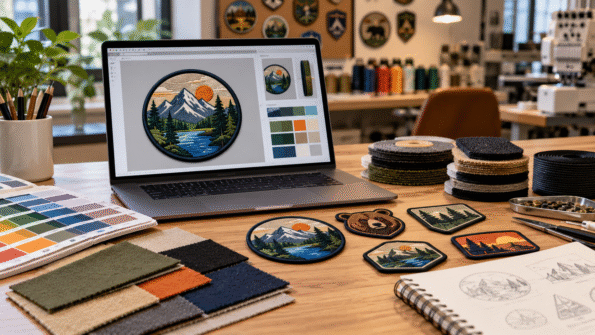
A custom patch does not go straight from uploaded logo to finished product.
The process usually moves through several stages: project requirements, artwork review, quote, digital proof, approval, production, quality review, and shipping.
The exact manufacturing method changes depending on whether you order embroidered, woven, PVC, chenille, leather, or sublimated patches, but the overall order journey follows the same basic idea: define the patch first, approve what will be made, and only then move into production.
If you are still deciding on size, shape, colors, backing, or material, read our Custom Patch Design Guide before starting your order.
The Custom Patch Process at a Glance
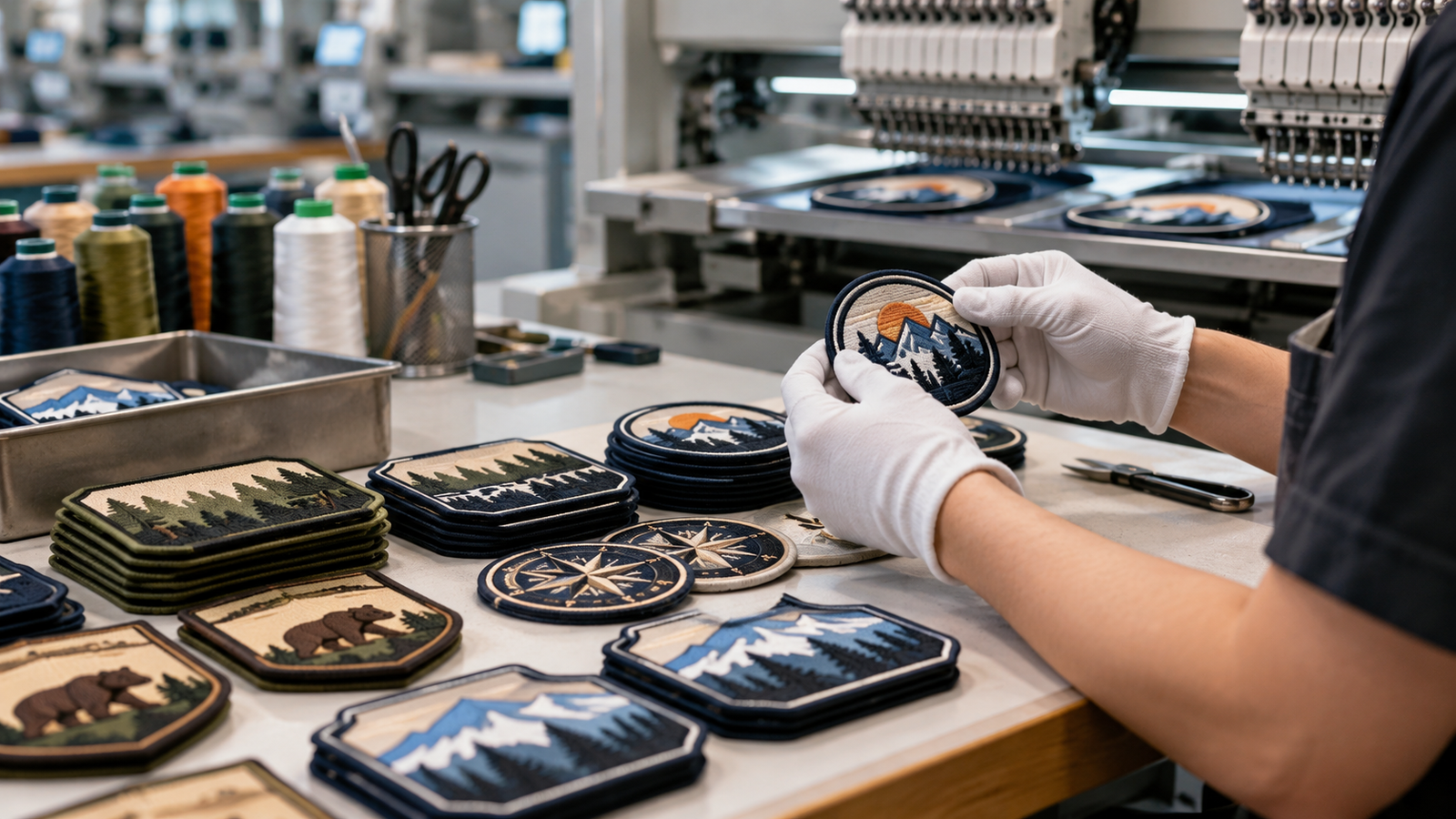
A typical custom patch project moves through these stages:
- Share the design and requirements.
- Review the artwork and intended use.
- Choose the patch construction.
- Receive a quote.
- Review the digital proof.
- Approve or request changes.
- Move the approved design into production.
- Check the finished patches.
- Prepare the order for shipping.
The important point is that production should follow approval—not replace it.
The proofing stage gives you a chance to catch problems before they become physical products.
1. Start With the Patch Requirements
The process begins with information.
A patch supplier needs to understand what you want to produce before the design can be prepared correctly.
Useful details include:
- Logo, artwork, sketch, or reference image
- Patch type
- Width and height
- Quantity
- Shape
- Colors
- Backing
- Intended application
- Any important design notes
You do not necessarily need perfect production-ready artwork at this point.
A clear logo, image, or concept can provide a starting point, especially when accompanied by notes explaining the details that matter most.
The intended use also provides important context. A patch for a hat may need different proportions from a large jacket-back design, while a removable uniform patch may require a different backing from a permanent clothing patch.
2. Artwork Is Reviewed for the Chosen Patch Type
Digital artwork needs to work as a physical product.
During artwork review, the design may need to be evaluated for elements such as:
- Small lettering
- Thin lines
- Color separation
- Shape
- Border
- Fine details
- Overall proportions
The manufacturing method matters here.
An embroidered patch uses stitches, while a PVC patch uses molded material. Woven patches can handle finer thread detail, while sublimation can preserve complex printed artwork.
This means one logo may need slightly different preparation depending on the patch type.
Artwork adjustments should preserve the identity of the original design while making it suitable for the selected production method.
3. The Patch Style Is Selected
Once the artwork and use case are understood, the project needs the appropriate construction.
PatchesOrder currently offers several Custom Patch styles, including:
- Embroidered
- Woven
- PVC
- Chenille
- Leather
- Sublimation
Each produces a different surface and visual effect.
Embroidery creates traditional raised stitching. Woven construction provides a smoother thread surface. PVC creates molded shapes and layers. Chenille produces thick varsity-style texture. Leather provides a structured branded look, while sublimation suits highly detailed printed artwork.
The goal is not to choose the most complicated option. It is to choose the material that fits the design.
4. A Quote Is Prepared From the Specifications
Once the supplier understands the product, a quote can be prepared around the actual project.
Factors may include:
- Patch type
- Dimensions
- Quantity
- Artwork
- Shape
- Backing
- Customization requirements
This is why a useful quote request should contain more than:
“How much for 100 patches?”
Two orders of the same quantity can involve very different products.
At this stage, confirm that the quote reflects the specifications you actually intend to order.
If you change the dimensions, material, quantity, or construction later, the quote may also need to be updated.
5. The Digital Proof Shows What Will Be Produced
The proof is one of the most important parts of the custom patch process.
It provides a visual representation of the proposed patch before production.
Review it carefully for:
- Correct spelling
- Logo version
- Patch shape
- Dimensions
- Colors
- Text
- Border
- Backing
- Element positioning
- Overall balance
Do not review the proof only as an image on a large screen.
Think about the actual finished size.
Tiny text that looks clear while zoomed in may become difficult to read on a small physical patch.
6. Changes Should Happen Before Approval
A proof is useful because it creates a revision point.
If something is wrong, this is the stage to fix it.
For example:
- Increase small text.
- Change a color.
- Adjust the border.
- Correct a name.
- Reposition an element.
- Simplify a fine detail.
Do not approve a proof with the assumption that a production issue can easily be corrected later.
Once physical manufacturing begins, design changes may require new production work.
Approval should mean:
This is the design and specification I want produced.
7. The Approved Design Moves Into Production
After approval, the patch can move into the manufacturing stage appropriate to its material.
The process differs considerably by patch type.
Embroidered and Woven Patches
Thread-based designs are translated into a production format suitable for stitching or weaving.
The finished appearance is built using thread rather than simply printing the digital image onto the surface.
PVC Patches
PVC designs may be prepared around molded shapes, color areas, and raised or recessed details.
Chenille Patches
Chenille uses thick yarn to create its characteristic soft, dimensional texture.
Leather Patches
Leather designs can require a different production approach depending on the intended logo treatment and finish.
Sublimation Patches
Sublimated designs use a print-based process that can reproduce complex colors and detailed graphics.
PatchesOrder’s exact machinery, production sequence, and facility workflow should be confirmed internally before publishing company-specific manufacturing claims.
8. Finished Patches Should Be Checked Against the Approved Design
After manufacturing, a quality review would typically compare the finished patches with the approved specifications.
Relevant checks may include:
- Design appearance
- Shape
- Dimensions
- Colors
- Lettering
- Border
- Backing
- General finish
For personalized orders, names or other variable details may also need to be checked carefully.
The purpose of this stage is straightforward: make sure the physical product reflects the order that was approved.
The exact PatchesOrder quality-control procedure should be confirmed before describing a specific inspection system or number of checks.
9. The Order Is Prepared for Shipping
Once production and any applicable quality review are complete, the order can be prepared for delivery.
Packaging requirements may differ according to:
- Patch material
- Quantity
- Order size
- Individual packaging needs
- Destination
Customers should confirm their delivery details accurately when placing the order.
Any specific PatchesOrder packaging method, dispatch procedure, tracking process, or delivery timeline should be confirmed internally before publication.
What Can Slow Down a Custom Patch Order?
Many avoidable delays happen before production rather than during it.
Common examples include:
- Missing dimensions
- Unclear artwork
- Unconfirmed quantity
- Spelling corrections
- Color changes
- Changing the backing after proofing
- Delayed proof approval
The easiest way to keep the project moving is to provide clear requirements and review the proof carefully when it arrives.
What Should You Have Ready Before Requesting a Quote?
You can make the process simpler by preparing:
Artwork: The clearest logo, image, or sketch available.
Patch type: Your preferred material, if known.
Dimensions: Approximate width and height.
Quantity: Number of patches required.
Backing: How the patch should attach.
Application: Hat, jacket, uniform, bag, apparel, or another use.
Notes: Anything that must not change in the design.
If you are unsure about one of these details, explain the intended use rather than guessing.
From Design Idea to Finished Patch
The custom patch process is easier to understand when you separate design decisions from production decisions.
First, define the patch.
Then review the artwork and specifications.
Next, approve the proof.
Only after the design is approved should it move into the appropriate manufacturing process.
That sequence helps reduce misunderstandings and gives the buyer an opportunity to review important details before the patch becomes a physical product.
Ready to start your own project?
Explore Custom Patches and request a free quote with your artwork, size, quantity, and intended use.
Frequently Asked Questions
Do I need finished artwork before ordering custom patches?
Not necessarily. A clear logo, reference image, sketch, or design concept can provide a starting point. Include notes about any text, colors, or details that must be preserved.
What is a custom patch proof?
A proof is a visual representation of the proposed patch that allows you to review the design and specifications before production.
What should I check on a patch proof?
Check spelling, colors, dimensions, shape, border, backing, artwork placement, and any personalized information before approving it.
Can I request changes after seeing the proof?
The proof stage is intended to allow review and necessary adjustments before production. Make sure all required changes are resolved before giving final approval.
Does every patch type use the same manufacturing process?
No. Embroidered, woven, PVC, chenille, leather, and sublimated patches use different materials and production methods.
When does patch production begin?
Production should begin after the design and relevant order specifications have been approved. The exact PatchesOrder internal workflow should be confirmed if a more specific company process is published.
