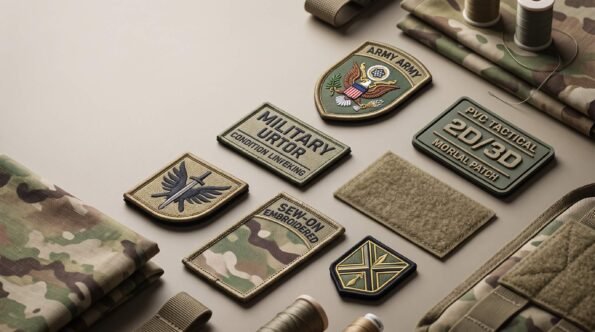
Army unit patches are more than decorative pieces added to a uniform or piece of equipment. They can represent a soldier’s current organization, commemorate service, identify a group, or build a shared sense of identity among members.
From traditional embroidered insignia to modern PVC morale patches, today’s army unit patches are available in a wide range of materials, shapes, finishes, and attachment options. The right choice depends on whether the patch is intended for an official uniform, tactical equipment, a veteran organization, a reunion, or personal memorabilia.
This guide explains the major types of army unit patches, how military symbols are used, which materials and backings work best, and what to consider before ordering custom designs.
What Are Army Unit Patches?
Army unit patches are insignia associated with a military organization, formation, group, or unit. In the U.S. Army, shoulder sleeve insignia (SSI) can identify a soldier’s organizational affiliation, while other insignia and unofficial morale patches serve different purposes.
The Army has a long-established heraldic tradition. The Institute of Heraldry has been responsible for researching and developing Army insignia, including shoulder sleeve insignia and distinctive unit insignia.
It is important to distinguish between an official military insignia and a custom commemorative or morale design. Official insignia may have specific approval, design, procurement, and wear requirements. Before reproducing an official U.S. Army mark commercially, check the applicable requirements and licensing rules.
Types of Army Unit Patches
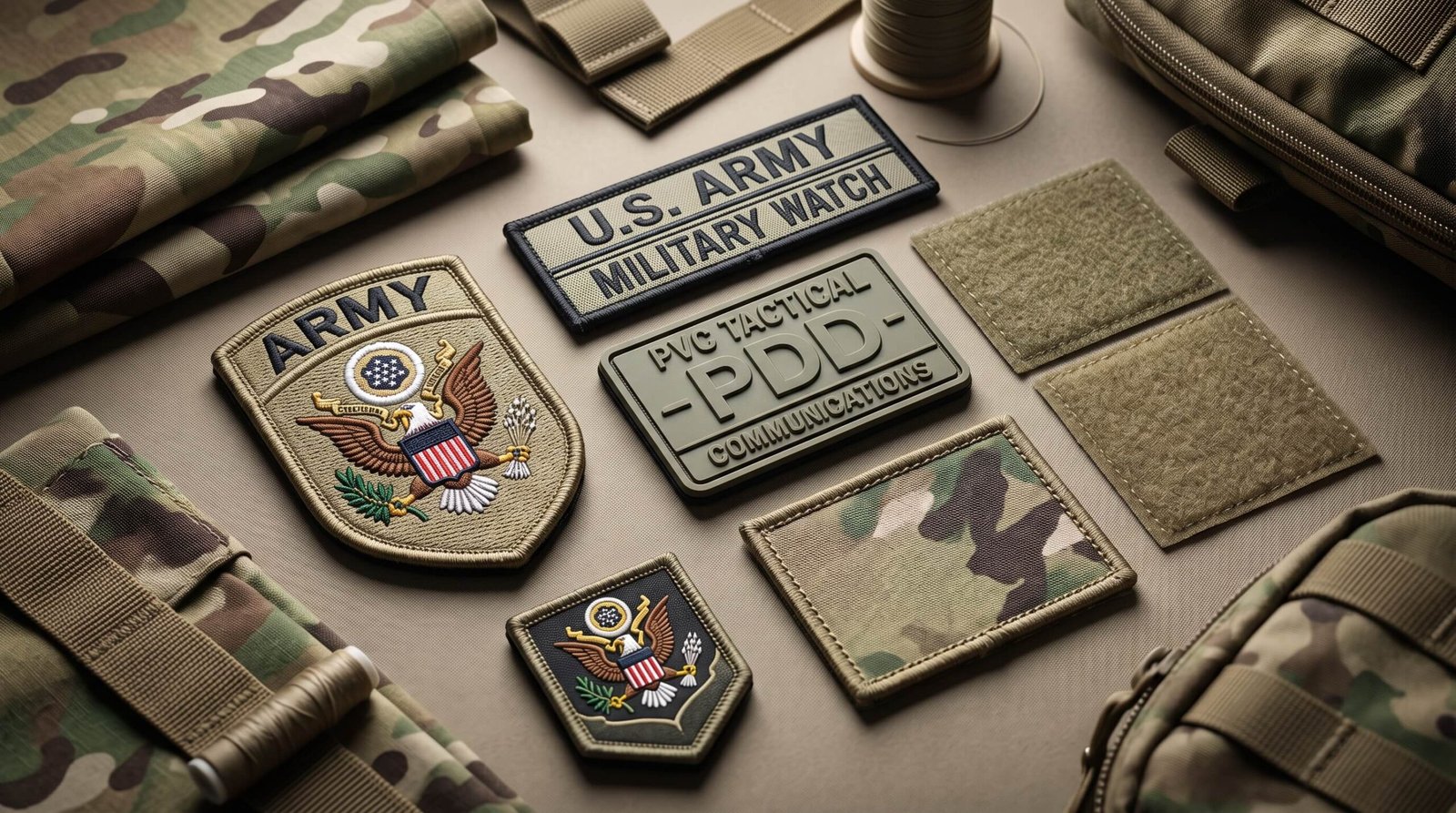
Not every military-style patch serves the same purpose. Understanding the category first makes it easier to choose the appropriate construction.
Shoulder Sleeve Insignia
Shoulder Sleeve Insignia, commonly called SSI, are official organizational insignia associated with Army units and organizations. Their designs can incorporate colors, symbols, shapes, and historical references connected to the organization.
If you are reproducing an official SSI, the approved design and applicable uniform regulations should take priority over a manufacturer’s standard template.
Combat and Deployment Patches
Combat-related shoulder insignia can represent qualifying service with a unit in an authorized area or period. These patches have a specific regulatory context, so they should not be treated simply as decorative versions of a standard unit logo.
For custom commemorative products, however, deployment dates, locations, unit references, and other service-related elements can be incorporated into a separate design intended for personal use or organizational events.
Unit and Organizational Insignia
Organizations may also use distinctive insignia, crests, tabs, emblems, and other identifying designs. These can communicate lineage, traditions, honors, or organizational identity.
When producing a reproduction of an established insignia, accuracy is particularly important. Small differences in lettering, proportions, symbols, or colors can change the appearance of the original design.
Morale and Tactical Patches
Morale patches are generally more flexible than official uniform insignia. They can feature mascots, callsigns, humorous artwork, unit references, slogans, or other designs created to strengthen group identity.
They are commonly produced as embroidered or PVC patches and frequently use hook-and-loop backing for attachment to compatible gear.
Understanding Military Patch Symbols and Colors
The visual language used in military insignia is often intentional. Shapes, colors, animals, weapons, lettering, and other elements can connect a design to a unit’s history or mission.
A shield, for example, may communicate ideas of defense and protection, while an eagle or other animal may represent strength, vigilance, speed, or heritage depending on the specific insignia.
However, there is no universal rule that gives every symbol exactly the same meaning across every military organization. The meaning of an official insignia should be interpreted from its approved description or heraldic documentation rather than assuming that a symbol always represents one specific function.
Color is equally important. Full-color insignia and subdued tactical versions can have very different visual requirements. A design intended for field use may need muted colors that work with the surrounding uniform or equipment, while a reunion or display patch may benefit from a broader color palette.
Choosing the Right Material for Army Unit Patches
Material affects appearance, detail, flexibility, maintenance, and durability. The best option depends on where the patch will be used.
Embroidered Patches
Embroidered patches remain one of the most recognizable choices for traditional military unit patches. Thread is stitched into a fabric base to create a textured surface.
They are particularly effective for bold logos, traditional insignia, lettering, flags, veteran organizations, and commemorative designs.
A key consideration is artwork complexity. Extremely small text and intricate linework may not reproduce cleanly in embroidery, especially when the finished patch is small.
Woven Patches
Woven patches use tightly woven threads to create a flatter surface than traditional embroidery.
This construction can be useful when a design contains fine lines, smaller lettering, or detailed graphics that need a smoother appearance. Woven patches are a practical option for designs where surface texture is less important than visual precision.
PVC Patches
PVC patches are molded rather than stitched. Their rubber-like construction provides a distinctive appearance and makes them suitable for outdoor equipment and applications where moisture resistance and easy cleaning are important.
PVC works especially well for tactical gear, packs, bags, plate carriers, outdoor equipment, and morale designs. Current military-patch manufacturers commonly offer PVC with hook-and-loop or sew-on attachment options.
Cordura and Specialty Materials
Laser-cut fabric constructions, Cordura-based patches, reflective elements, and other specialty finishes can provide additional options for tactical and outdoor applications.
These materials should be selected according to the intended environment rather than simply choosing the most advanced-looking option. Consider abrasion, moisture, flexibility, visibility, and how frequently the patch will be removed or washed.
Choosing the Right Patch Backing
Backing determines how a patch attaches to clothing or equipment.
Hook-and-Loop Backing
Hook-and-loop is one of the most practical choices for tactical equipment and removable patches. The patch can be attached to a matching loop panel and removed when the design needs to be changed.
This makes it especially useful for morale patches, tactical bags, plate carriers, and other equipment designed with loop fields.
Sew-On Backing
Sew-on patches provide a permanent attachment method and are suitable when a patch is intended to remain in one location.
They are particularly useful for garments, jackets, bags, traditional applications, and situations where long-term attachment is more important than removability.
Heat-Seal Backing
Heat-seal backing uses heat-activated adhesive to attach a patch to compatible fabric. It can be convenient for casual apparel and promotional applications.
However, the fabric, heat tolerance, surface shape, and intended use should be checked before selecting this method. For demanding applications, sewing may provide more dependable long-term attachment.
How to Design Custom Army Patches
Creating effective custom army patches starts with a clear concept rather than adding as many symbols as possible.
Start With One Main Idea
Choose the central element first. This could be a unit symbol, mascot, vehicle silhouette, geographic reference, motto, or commemorative element.
Supporting graphics should reinforce the main concept instead of competing with it.
Keep Text Easy to Read
Small lettering is one of the most common problems in patch design. Choose a strong, readable typeface and give letters enough space to remain distinguishable after production.
If the patch will be viewed from a distance, simplify the design further.
Match the Design to the Material
Not every artwork style works equally well with every construction.
Bold shapes and traditional insignia often work well with embroidery. Fine lines and compact lettering may benefit from woven construction. Bold, layered artwork can be highly effective in PVC.
The design should therefore be developed with the manufacturing method in mind from the beginning.
Select an Appropriate Border
Merrowed borders create a traditional finished edge and work well with common geometric patch shapes. Laser-cut or hot-cut edges can be better suited to complex silhouettes.
The border should complement the artwork rather than hide important design elements.
How to Order Military Unit Patches
Ordering custom military patches becomes much easier when the specifications are finalized before production.
Prepare Your Artwork
A vector file is ideal when available because it allows the artwork to be scaled and adjusted without losing its basic shape. High-resolution raster artwork can also be used as a starting point for digitizing.
Provide the manufacturer with the original design, preferred dimensions, colors, backing type, and intended application.
Confirm Size and Construction
Do not select dimensions based only on what looks good on a computer screen. Consider the actual area where the patch will be attached.
For curved surfaces such as caps or equipment, a physical-size paper template can be useful for checking proportions.
Approve the Production Proof
A digital proof gives you an opportunity to check the artwork before manufacturing begins.
Review:
- Spelling and numbers
- Logo proportions
- Colors
- Border shape
- Text readability
- Patch dimensions
- Backing type
- Placement of small design elements
For embroidered patches, also ask how very small details will be handled during digitizing.
Confirm Quantity and Lead Time
Pricing and production schedules vary according to material, dimensions, artwork complexity, quantity, and finishing options.
For a unit order, consider whether you need replacement pieces or additional patches for future members. If the patches are being produced for a reunion, retirement event, deployment milestone, or other fixed date, allow enough time for artwork approval and production.
Common Mistakes to Avoid
One of the biggest mistakes is trying to fit too much information into a small patch. A crowded design can lose clarity once converted into stitches, woven threads, or molded layers.
Other problems include selecting the wrong backing, ignoring the curvature of the application surface, using very thin fonts, and approving artwork without checking it at its actual production size.
Another important mistake is treating official insignia and custom morale designs as interchangeable. If a design represents an official U.S. Army insignia, verify the applicable authorization and usage requirements before production.
Final Checklist Before Ordering
Before approving your army unit patches, confirm:
- Purpose: official insignia, commemorative patch, veteran organization, or morale design
- Material: embroidered, woven, PVC, or specialty fabric
- Size: appropriate for the actual attachment area
- Artwork: clear at final production size
- Colors: suitable for the intended application
- Border: compatible with the patch shape
- Backing: hook-and-loop, sew-on, or heat-seal
- Proof: spelling, proportions, colors, and details reviewed
- Quantity: enough pieces for the intended group and future replacements
- Timing: production and approval schedule fits your event or delivery date
A well-designed patch balances identity, readability, construction, and practical use. Whether you are producing traditional military unit patches or a modern morale design, choosing the right material and backing can make the finished piece look better and perform reliably.
For official U.S. Army insignia, always verify the current rules and approved specifications rather than relying solely on a manufacturer’s design guide.
FAQs:
What are army unit patches used for?
Army unit patches identify or represent a military organization, unit, or group. Depending on the type, a patch may communicate organizational affiliation, unit heritage, service history, or morale. Official insignia such as Shoulder Sleeve Insignia (SSI) have specific military purposes, while morale patches are generally used for informal identity and unit pride.
What is a Shoulder Sleeve Insignia (SSI)?
A Shoulder Sleeve Insignia, commonly called an SSI, is an official U.S. Army insignia associated with a unit or organization. Its design can incorporate distinctive symbols, colors, and historical elements that represent the unit’s identity and heritage. SSI designs and wear are governed by applicable Army policies and regulations.
What is the difference between an SSI and a morale patch?
An SSI is an official organizational insignia used within the U.S. Army, while a morale patch is generally an unofficial design created for unit spirit, humor, identification, or personal expression. Morale patches can feature mascots, slogans, callsigns, mission references, or custom artwork and are commonly attached to tactical clothing and gear.
What material is best for army unit patches?
The best material depends on the design and intended use. Embroidered patches provide a traditional, textured appearance and work well for bold insignia and commemorative designs. Woven patches are better suited to fine lines and small lettering, while PVC patches offer a durable, low-maintenance option for tactical and outdoor equipment.
What backing should I choose for military patches?
Hook-and-loop backing is a practical choice when a patch needs to be removed or replaced regularly, especially on tactical gear with a compatible loop panel. Sew-on backing provides a more permanent attachment for uniforms, jackets, bags, and other garments. Heat-seal backing can be suitable for compatible fabrics when a quick application method is preferred.
Can I make my own custom army patch?
Yes. You can create a custom military-style, commemorative, veteran, organizational, or morale patch. However, reproducing official U.S. Army insignia is different from creating an original military-inspired design. Before producing or selling an official insignia, check the applicable Army regulations, trademark requirements, and authorization rules.
How do I design an army patch that is easy to read?
Start with one strong central symbol and keep supporting elements simple. Use bold lettering, adequate spacing, clear color contrast, and a border that does not crowd the artwork. Always review the design at its actual patch size because very small text, thin lines, and intricate details may lose clarity during embroidery or other manufacturing processes.
How long does it take to make custom military patches?
Production time varies according to the patch material, size, artwork complexity, quantity, backing, and manufacturer’s workflow. Embroidered and woven patches may have different production schedules from molded PVC patches. If the patches are needed for a deployment event, reunion, ceremony, or other fixed date, allow additional time for artwork approval and production.
